













The short answer
Dizziness is one of the most common symptoms after a concussion or car accident. It can come from loose crystals in the inner ear (BPPV), from the concussion itself, or from a neck injury. Many causes respond well to treatment, such as repositioning maneuvers for BPPV and vestibular rehabilitation therapy. Sudden severe vertigo with slurred speech, double vision or weakness needs emergency care.
Why do I feel dizzy after a head injury?
Your sense of balance depends on three systems working together: the inner ear, your vision and the sensors in your neck and joints, all coordinated by the brain. A blow to the head or a violent jolt, such as a car crash, can disrupt any of them.
Dizziness may start right away or show up days later. It can feel like spinning, rocking, lightheadedness or simply feeling off balance.
What is post-traumatic BPPV?
Benign paroxysmal positional vertigo (BPPV) happens when tiny calcium crystals in the inner ear shift into the wrong canal. It causes brief, intense spinning, usually under a minute, when you roll over in bed, look up or bend down.
Head trauma is a known cause of BPPV. The good news is that it is often treated in the office with a repositioning maneuver, such as the Epley maneuver, that guides the crystals back where they belong.
What other conditions cause dizziness after an injury?
Post-concussion dizziness can come from changes in how the brain processes balance and visual information. People often feel worse in busy places, when scrolling on a phone or when moving their head quickly.
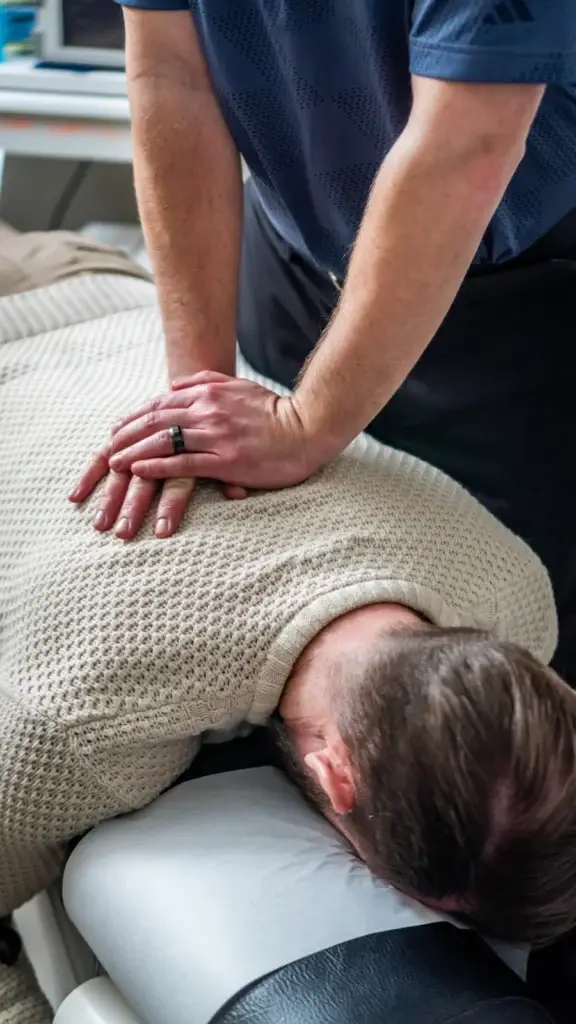
Whiplash can cause cervicogenic dizziness, an unsteady feeling linked to neck pain and stiffness. Less commonly, an injury can damage the inner ear itself. A careful exam sorts out which causes are involved, since more than one can be present.

Dizziness often comes with headaches and trouble concentrating after a concussion.
When is dizziness an emergency?
Call 911 for sudden severe vertigo together with slurred speech, double vision, facial drooping, weakness or numbness on one side, trouble walking, or the worst headache of your life. These can be signs of a stroke or bleeding in the brain.
After a head injury, also seek emergency care for repeated vomiting, a seizure, worsening confusion or a headache that keeps getting worse.
How is post-traumatic vertigo diagnosed?
A careful exam reviews how the injury happened and tests eye movements, balance, coordination and the neck. Positional tests, such as the Dix-Hallpike test, can confirm BPPV.
Imaging or referral to an ear specialist may be recommended if the exam suggests a structural injury or the symptoms do not fit a common pattern. Need concussion testing? Our sister clinic, RecoverTBI, provides it in Hialeah and Homestead. In Tallahassee, neurology evaluations are with Dr. Jose A. Marquez at our clinic.
How is it treated, and how long does it last?
Treatment matches the cause. BPPV is treated with repositioning maneuvers. Vestibular rehabilitation therapy, a specialized form of rehab, uses eye, head and balance exercises to retrain the brain. Neck-related dizziness responds to treatment of the neck itself, and headaches or sleep problems are managed alongside.
Avoid driving or working at heights while you are dizzy, and get up slowly from bed.
Learn more: Concussion & TBI rehab · Our Homestead clinic
This article is general information, not medical or legal advice. Talk to a licensed provider about your situation.